
Top 10 Non-LLM Open Source Models
Ten open models that do something other than chat: they hear, see, read documents, draw, search by meaning and forecast. Each one has an open source licence that allows commercial use, was updated in the last 12 months, and ranks high on how much people use it, how much they build on it, how well it scores on independent leaderboards, and how easily it runs. Below the list: exactly how it was made.
- 1

Whisper large-v3-turbo
OpenAIspeech recognitionMITAn 809M parameter OpenAI speech recognition model that turns speech in 99 languages into text, for developers who want Whisper accuracy at a much higher speed.
7.60of 108.9 / 5.13 / 6 / 10 (rated / useful / quality / hardware) - 2

YOLO26
UltralyticsvisionAGPL-3.0YOLO26 is a family of real-time vision models from Ultralytics that find, outline and classify objects in images and video, built for teams that deploy on CPUs, edge devices and GPUs.
7.20of 106.89 / 5.56 / 8 / 9 (rated / useful / quality / hardware) - 3

Z-Image-Turbo
 Alibaba (Qwen)image generationApache-2.0
Z-Image-Turbo is a 6B-parameter open text-to-image model from Alibaba's Tongyi-MAI team that makes photo-like images and renders English and Chinese text in 8 steps, for people who want to generate images on a 16 GB consumer GPU.
6.77of 108.12 / 5.3 / 6 / 7 (rated / useful / quality / hardware) - 4

EmbeddingGemma 2
GoogleembeddingApache-2.0A 740M parameter Google DeepMind model that turns text, code, images, video and audio into one shared vector space, for on-device search, RAG and classification.
6.73of 107.84 / 3.94 / 6 / 9 (rated / useful / quality / hardware) - 5
Qwen3-Embedding-0.6B
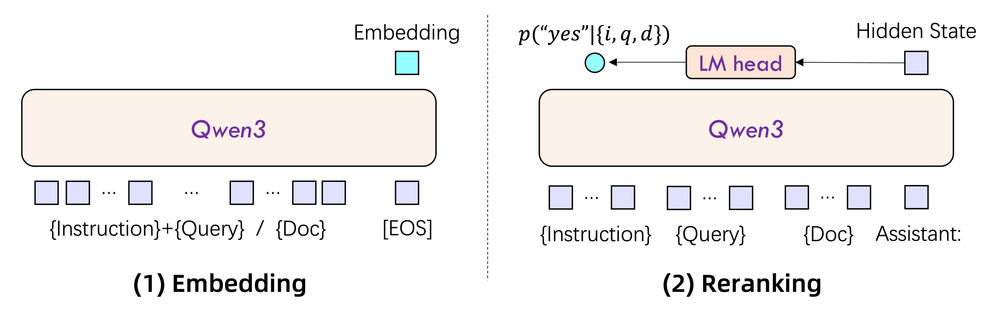
Alibaba (Qwen)embeddingApache-2.0A 0.6B parameter text embedding model from the Qwen team that turns text and code in 100+ languages into vectors for search, RAG, classification and clustering.
6.66of 107.53 / 4.88 / 6 / 8 (rated / useful / quality / hardware) - 6
Parakeet TDT 0.6B v3
 NVIDIAspeech recognitionCC-BY-4.0
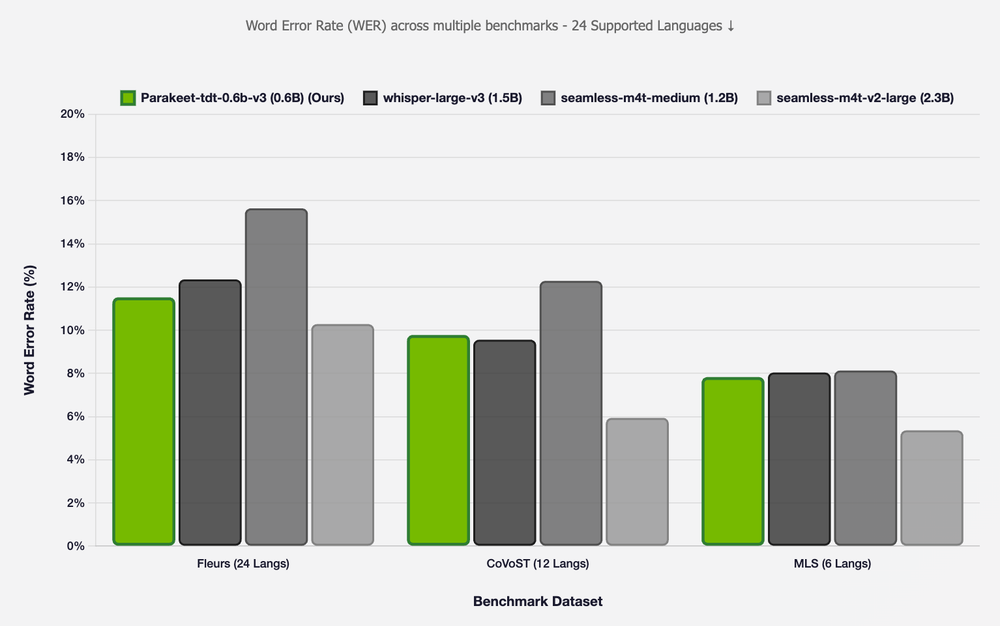
A 600M parameter NVIDIA speech recognition model for 25 European languages, built for fast, high-volume transcription with punctuation and timestamps.
6.62of 107.64 / 3.77 / 6 / 9 (rated / useful / quality / hardware) - 7

Chronos-2
Amazontime seriesApache-2.0Chronos-2 is a 120M-parameter open forecasting model from Amazon that predicts future values of one or many time series, with or without outside drivers such as prices or promotions, without training on the user's data.
6.02of 107.52 / 4.77 / 6 / 5 (rated / useful / quality / hardware) - 8
DeepSeek-OCR
 DeepSeekOCR and documentMIT
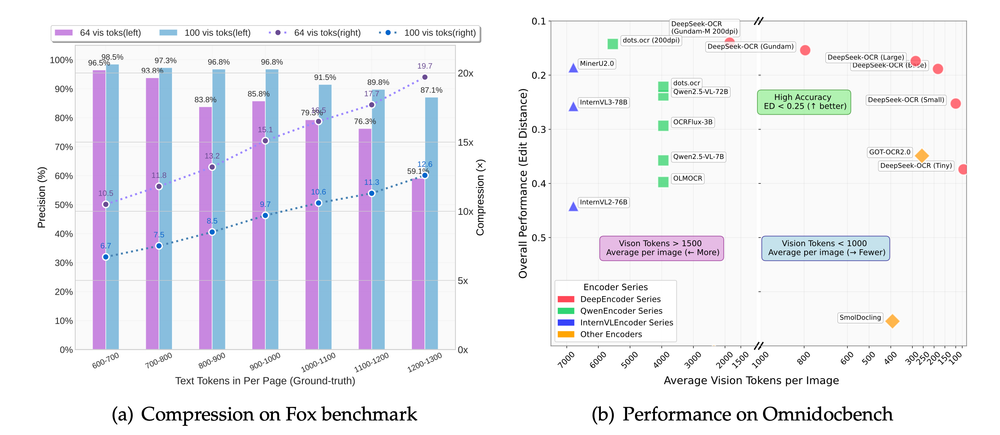
DeepSeek-OCR is a 3B-parameter open model from DeepSeek that reads document images and turns them into text or Markdown using very few vision tokens, for teams that convert large volumes of pages.
5.87of 108.29 / 3.86 / 3 / 7 (rated / useful / quality / hardware) - 9
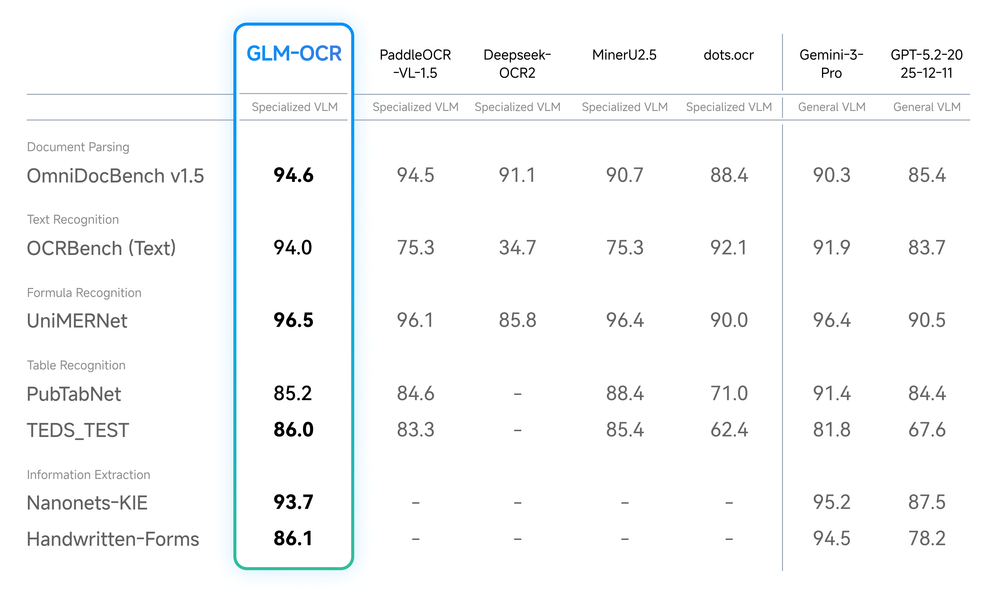
GLM-OCR
 Z.ai (Zhipu)OCR and documentMIT
GLM-OCR is a small open model from Z.ai that turns document images and PDFs into Markdown, HTML tables, LaTeX formulas and JSON fields, for teams that need document parsing they can run themselves.
5.69of 107.8 / 3.02 / 3 / 8 (rated / useful / quality / hardware) - 10
TimesFM 2.5
Googletime seriesApache-2.0TimesFM 2.5 is a 200M-parameter open forecasting model from Google Research that predicts the next values of a time series, with quantile ranges, without training on the user's data.
5.53of 107.48 / 2.85 / 6 / 5 (rated / useful / quality / hardware)
How the List Is Made
open non-LLM models consideredFrom AURION and the most-downloaded lists of 26 Hugging Face tasks
allow commercial use9 left: non-commercial or research-only licences
updated in the last 12 months10 left: no release or update since November 2025
open source without use restrictions5 left: licences that add their own conditions
in the Top 10Ranked by score, one model per family, at most two per kind of task
The Four Scores and Their Weights
Most rated
Hugging Face downloads last month and likes, and GitHub stars of the official repository, each on a log scale
Most useful
How many teams build on it (fine-tunes and adapters on Hugging Face) and how many industry use cases it serves in AURION
Proven quality
Its standing on a public independent leaderboard for its task (MTEB, Open ASR, COCO, GIFT-Eval)
Runs on ordinary hardware
Its size, and how many runtimes in Harness run it
Each score runs from 0 to 10. The total is 0.35 x most rated + 0.25 x most useful + 0.20 x proven quality + 0.20 x ordinary hardware. Two rules then shape the ten: one model per family (so two versions of one model never take two places), and at most two models per kind of task (so the list covers hearing, seeing, reading, drawing, searching and forecasting, not ten of one kind).